Ovine PPRV Antibody Testing: What It Tells You, and When to Use It on the Farm
Jun 30, 2026
For sheep and goat farmers across sub-Saharan Africa, the Middle East, and South and Southeast Asia, Peste des Petits Ruminants (PPR) has a more brutal nickname: "goat plague." It's not an exaggeration. I once spoke with a pastoralist in northern Kenya who told me that over the course of one outbreak, his herd of 120 goats was reduced to fewer than 30. The survivors were so emaciated they were nearly worthless at market, and the following year's lamb crop never materialised.
For millions of smallholder farmers, PPR isn't a theoretical risk-it's the kind of disease that can wipe out a family's livelihood overnight. The high mortality is bad enough, but the production losses, movement bans, and the crippling cost of emergency vaccination and disinfection can bury a farm for years.
That's why any vet who works with small ruminants will tell you: PPR is not a disease you "treat." There is no cure. What matters are two things-whether your vaccine program is actually working, and whether your flock's immunity is solid enough to stop an outbreak before it starts.
First things first: what exactly is PPR?
PPR is caused by a virus in the Morbillivirus genus-the same family as measles and rinderpest. Goats tend to get hit harder than sheep, but neither species is safe. If you've ever seen a goat in the acute stage of PPR-high fever, thick pus gluing its eyes shut, raw ulcers covering its gums and tongue, diarrhoea that leaves it dehydrated, and laboured breathing that sounds like a bellows-you understand why field vets dread this diagnosis more than almost anything else.
The really devastating part? Naïve populations-especially young animals with no prior exposure-can suffer mortality rates exceeding 80%. That is not a misprint. Eighty percent.
Antibody testing vs. antigen testing: they're not the same thing
One of the most common confusions I see on farms is this: if you want to know whether PPR is in the flock, why not just test for the virus itself?
The answer comes down to what question you're actually asking.
- Antigen tests (like PCR or rapid antigen strips) answer: "Is this animal carrying the virus right now?"
- Antibody tests answer: "Has this animal's immune system ever responded to the virus-either through vaccination or natural infection?"
Think of it this way: an antigen test is like checking whether someone currently has the flu. An antibody test is like checking whether they've been vaccinated or had the flu in the past-their immune system remembers it.
In practical farm terms, antibody testing is rarely about diagnosing a sick individual. It's about taking the temperature of the whole flock's immunity. Here are the situations where I've seen it make a real difference:
After vaccination
Wait three to four weeks post-vaccination, pull a few blood samples, and run an antibody test. I've lost count of how many times we've discovered that a batch of vaccine was ruined by a broken cold chain-everyone thought the flock was protected, but the antibody results told a very different story. Without that check, you're flying blind.
Before bringing in new breeding stock
A seller's vaccination record is useful, but I wouldn't bet my whole flock on it. When you're buying a ram or buck from another region, quarantine and antibody screening give you concrete evidence of its immune status. It's a small investment compared to the cost of introducing PPR to your farm.
Routine surveillance
Even in clinically healthy flocks, I recommend a random antibody screen at least once a year. It tells you which age groups are losing their protective antibodies and need a booster-before a virus finds that weak spot.
After a suspected outbreak
Once the flames are out, antibody testing helps you understand the true extent of exposure. Which animals actually mounted a response? Which ones stayed negative and remain vulnerable? This information is gold for planning the next round of vaccination and for reporting to regional disease control programs.
A lesson I learned the hard way in Pakistan
A few years ago, I was working with a goat cooperative in Punjab province. Their vaccination records were impeccable-every dose logged, every date recorded. Yet they still had a small PPR flare-up.
We tested the flock and found the problem immediately. The older animals had solid antibody levels. The younger ones-the replacements that had been brought in the previous year-were almost completely unprotected. Turned out there had been a vaccine shortage during their intake period, and they never got their shots. The records didn't show it because the gap was in the delivery, not the documentation.
That case stuck with me because it drove home a simple truth: vaccination records are not the same as immunity records. Your flock will always have gaps-in youngstock, in new purchases, in animals that slipped through the net. Antibody testing is how you find those gaps and plug them.
Why rapid field tests are a game-changer in remote areas
In the kind of places where PPR is endemic, we're often working hundreds of kilometres from the nearest diagnostic lab. Sending serum samples to a central facility can take weeks, and by the time results come back, the season has changed, the animals have moved, or the outbreak has already run its course.
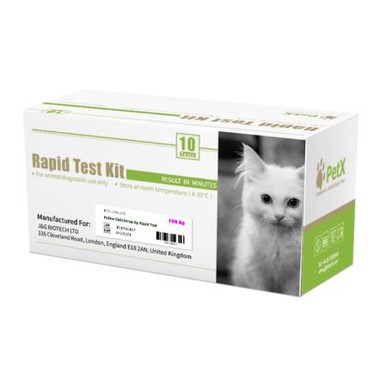
That's where rapid antibody test kits have been a practical lifesaver. They're not as sensitive as a laboratory ELISA, but for field screening, the trade-offs are worth it:
Results in 5 to 10 minutes, not days
Minimal equipment
You can make vaccination decisions on the spot, without a second farm visit
Low cost per sample, so you can screen a meaningful number of animals
That said, rapid tests have their limits-false positives and false negatives do happen. Our standard approach is to use them as a triage tool. If a flock screens positive or shows an unusual pattern, we send confirmatory samples to the lab. It's not perfect, but it's practical, and in the field, practical beats perfect every time.
The bigger picture: PPR eradication isn't just a slogan
The World Organisation for Animal Health and the FAO have set a target to eradicate PPR globally by 2030. It's ambitious, but on the ground, it comes down to three things:
- Vaccination that actually works-proper cold chain, correct dosage, right timing
- Monitoring that tells you the truth-regular antibody checks, not just paperwork
- Biosecurity that doesn't cut corners-quarantine and testing for all incoming animals
Antibody testing fits squarely into that second point. It's not flashy, it won't make headlines, but it answers the single most practical question a farmer or vet can ask: "If PPR shows up tomorrow, does my flock have what it takes to fight it off?"
Over the years, I've learned that in livestock farming, the biggest danger isn't the disease itself-it's the assumptions we make. I assumed the vaccine worked. I assumed the new ram was safe. I assumed the old ewes still had good immunity. And too often, those assumptions are exactly what let the disease in.
Antibody testing is just a tool-but it's a tool that pokes holes in bad assumptions. And sometimes, that's exactly what you need.