Feline Hemotropic Mycoplasma – What Vets and Cat Owners Actually Need to Know
Aug 04, 2026
Let's be honest-feline hemotropic mycoplasma isn't exactly dinner table conversation. But if you work with cats long enough, you'll run into it. And the tricky part is, it doesn't always announce itself with a flashing sign.
So here's the deal.
The bug and what it does
You've got these bacteria-Mycoplasma haemofelis is the main troublemaker-that glue themselves to red blood cells. Once they're attached, the cat's own immune system often steps in and starts destroying those cells, which drops the red blood cell count. That's anemia. Sometimes it's mild, sometimes it's severe enough that you're looking at a transfusion and hospitalization.
The weird thing? Some cats carry this organism for months and you'd never know it. Normal energy, normal appetite, normal everything. Then something stresses them out-another illness, surgery, even just a change in environment-and boom, they crash.
How does it spread?
We've got a pretty good idea, but not the whole story. Cat fights are definitely a big one-bite wounds transmit blood directly, and that's basically a direct injection of infected cells. Fleas and ticks? Almost certainly involved, though the exact mechanics are still being studied. Blood transfusions from unscreened donors are another clear risk. And there's some evidence for mother-to-kitten transmission, though it's less well understood.
What makes it messy is that a cat can be infectious without showing any signs. So if you're running a multi-cat household, a shelter, or a cattery, you could have one silent carrier seeding the whole group before anyone gets sick enough to investigate.
What to look for
The symptoms are basically anemia symptoms, which isn't super helpful because a dozen other things cause the same picture. Pale gums-that's a big one. Lethargy, not eating, losing weight. Fever that comes and goes. Some cats breathe faster or heavier. Jaundice shows up in a subset of cases but not all.
Honestly, the most useful clue is usually the history. Indoor-only cat with no fleas and no new cats introduced? Probably lower on the list. Outdoor scrapper with a flea problem and a recent fight? That's the one you want to test.
Why testing matters
Here's the thing about anemia in cats-it's a symptom, not a diagnosis. And the differential list is long: kidney disease, lymphoma, immune-mediated hemolytic anemia, toxin exposure, blood loss from trauma or parasites, FeLV, FIV, the list goes on. FHM is just one piece of the puzzle, but it's a piece you can actually test for fairly easily now.
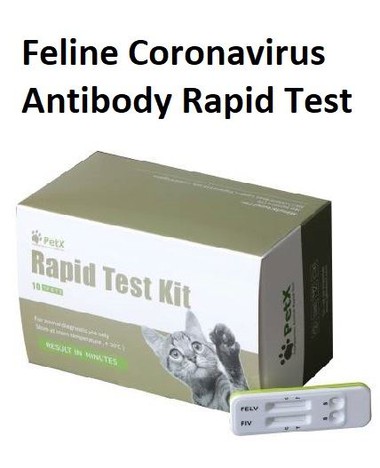
The antigen test that's available is a rapid in-clinic kit. You run it, you get an answer in minutes. It's not the be-all and end-all-negative results don't always rule it out completely, and positive results need to be interpreted alongside other findings-but it's a hell of a lot faster than waiting for PCR results from a reference lab when you've got a cat that's crashing in front of you.
When do you pull the trigger on testing?
Most vets I know would order it in these scenarios:
- Unexplained anemia, especially regenerative anemia on the blood smear
- Fever that doesn't fit any other pattern
- History that includes outdoor access, fighting, or fleas
- Cats that have recurrent episodes of anemia-this could be a persistent infection flaring up
- Before a blood donation, obviously, but also before introducing a new cat into a group
Some clinics will run it as part of a sick-cat workup almost routinely, especially in areas where fleas are common. Others use it more selectively. There's no hard-and-fast rule, but I'd argue that if you've got a cat with anemia and you're not sure why, this test is cheap enough and fast enough that it's worth doing early rather than later.
One more thing about that rapid test
It's a qualitative antigen test-meaning it tells you "yes" or "no" to the presence of mycoplasma antigens, not how many organisms are there. That's fine for screening purposes. But keep in mind that if the cat has a very low-level infection, you might get a false negative. If the clinical picture is strong, a negative rapid test doesn't necessarily mean you're off the hook-send out a PCR to be sure.
On the flip side, a positive result in a cat with compatible symptoms gives you a clear direction. Treatment is doxycycline, usually for a couple of weeks, and supportive care as needed. Many cats respond well.
Bottom line
FHM is one of those conditions that sits in the gray zone-sometimes obvious, sometimes stealthy, and often overlooked until things get bad. The rapid test isn't perfect, but it's a useful tool that's changed how we approach feline anemia in practice. Regular parasite control, paying attention to outdoor risks, and not brushing off vague signs of illness-that's the stuff that actually makes a difference.
If you're a vet, have a low threshold to test. If you're an owner, don't panic if your cat gets diagnosed-most do fine with treatment-but do take flea prevention seriously and keep those cats indoors if you can.