Bovine Tuberculosis and Antigen Test: Practical Considerations for Herd Management
Jul 02, 2026
If you've spent any time in the cattle business, bovine tuberculosis (bTB) is a familiar headache. Governments have run eradication campaigns for decades, and in some regions the results have been impressive. But in other areas-particularly where wildlife carry the infection, livestock move across state lines frequently, and surveillance networks have gaps-the disease just won't go away. It keeps costing producers money, year after year.
From a veterinarian's perspective, the real problem isn't the disease itself-it's that you don't know it's there until it's already moving through the herd. bTB doesn't hit like influenza, where an animal spikes a fever and starts coughing right away. It's slow. A cow can carry the infection for six months or a year, looking perfectly healthy, putting on weight, milking fine. All that time, though, she's shedding bacteria into the environment-into the feed trough, the waterer, the air of the barn. By the time you actually see weight loss, a persistent cough, or dropping milk production, the infection has often already spread to several other animals.
The Pathogen and How It Moves
The culprit is Mycobacterium bovis, a close relative of the bacterium that causes tuberculosis in humans. But here's the complicating factor: M. bovis has a much wider host range. It infects not just cattle, but deer, badgers, wild boar, even cats and dogs in some cases. That makes control messy, because even if your biosecurity is tight inside the fence line, you can't fully control what wanders in from outside.
Transmission routes aren't complicated: respiratory droplets from close contact, shared water and feed, contaminated bedding-it's all about contact, either between animals or between animals and a contaminated environment. The disease doesn't have a strong seasonal pattern, but we do see more issues in winter when housing densities go up and ventilation drops.
When to Test and Why
One piece of advice I find myself repeating to producers is this: don't wait for symptoms. By the time you see clinical signs, the cost of dealing with the situation has already multiplied-not just in terms of culling positive animals, but in whole-herd testing, movement restrictions, quarantine protocols, and the knock-on effects on your operation's cash flow.
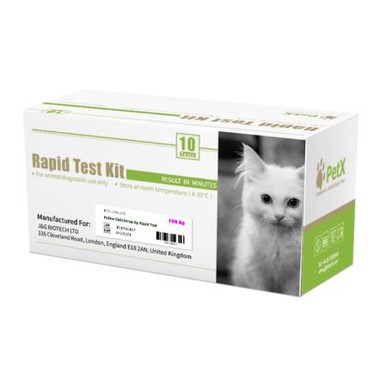
This is where antigen testing earns its place. Unlike antibody tests, which tell you an animal has been exposed at some point in the past, antigen tests look for components of the bacterium itself. A positive antigen result is more likely to mean active infection-which is to say, the animal is shedding bacteria right now and can transmit to others. That's a distinction with a real practical difference. An antibody-positive animal leaves you guessing about whether it's currently infectious; an antigen-positive animal demands action-isolation first, then further diagnostics to confirm.
That said, antigen testing isn't a silver bullet. In the field, false negatives happen, especially in early infection when bacterial loads are still low. So we never make decisions on one test alone. Think of antigen testing more as an early warning system-a sign that says "pay closer attention to this animal."
Where It Works on the Farm
Based on cases I've worked on, antigen testing tends to be most useful in a few specific scenarios.
New arrivals. When cattle come in from different sources, you don't always know what disease history they bring with them. Running an antigen test during the quarantine period-before new animals enter the main herd-has saved more than a few operations from costly outbreaks. It's not cheap, but compared to the alternative, it's good insurance.
Unexplained production drops. I've seen herds where milk output drifted down over several weeks, feed intake stayed normal, and there was no obvious management change. You run through the usual suspects-feed quality, water, weather-and nothing fits. In a few of those cases, antigen screening turned up infected animals that nobody had suspected. It's not the first thing you check, but it belongs on the list.
Surveillance near known outbreaks. If a positive case turns up on a neighboring farm, the pressure on surrounding herds goes up immediately. Stepping up antigen testing frequency in that situation is a sensible way to gauge your own herd's status and catch any cross-over infections early.
Building It into a Realistic Control Program
No single test solves this problem. The operations that stay on top of bTB over the long haul are always the ones that combine diagnostics with good basic management-and I mean the boring, unglamorous stuff that actually works.
Some practices that have stood the test of time:
Before buying animals, do your homework on the source herd's disease monitoring history-don't just take a health certificate at face value.
Quarantine new arrivals for at least three to four weeks, and complete your testing during that period.
Pay attention to barn ventilation-especially in winter. Reducing ammonia levels and improving airflow supports respiratory health across the board, which helps across the board.
Manage water sources to minimize wildlife access. It sounds obvious, but it's amazing how often this gets overlooked.
Stay in regular contact with your veterinarian, not just when something goes wrong. Routine check-ins make a difference when you're trying to catch problems early.
The real value of antigen testing, in my view, is that it gives you a head start. It's not perfect, and it's not a standalone solution. But that advance warning-the chance to act before a problem becomes a crisis-can be the difference between a manageable situation and a major financial hit.
Bottom Line
We're not going to eliminate bovine tuberculosis anytime soon-not with its complex host ecology, its slow progression, and the practical limits of surveillance in real-world farming conditions. But at the farm level, antigen testing gives us a tool to intervene earlier than we could by waiting for symptoms alone.
Used thoughtfully-alongside clinical exams, confirmatory laboratory work, and solid biosecurity practices-it makes surveillance more targeted and helps producers stay ahead of the disease. And in this business, staying ahead is really the only game worth playing.