Feline Giardia Infection: The Importance of Antigen Testing in Clinical Diagnosis
Mar 12, 2026
Understanding Feline Giardia Infection
Giardia lamblia is a common intestinal protozoan parasite that infects many mammals, including cats. It primarily colonizes the small intestine and can lead to gastrointestinal disturbances, particularly in kittens, shelter animals, and multi-cat environments.
Transmission typically occurs through the fecal–oral route, when cats ingest cysts present in contaminated water, food, or environments. Because Giardia cysts can survive for extended periods in moist conditions, the parasite spreads easily in crowded or unsanitary environments.
Clinical Signs in Infected Cats
Some cats infected with Giardia remain asymptomatic carriers, while others develop noticeable gastrointestinal symptoms. Common clinical manifestations include:
- Soft stool or watery diarrhea
- Foul-smelling feces
- Weight loss or poor weight gain
- Vomiting (occasionally)
- Dehydration in severe cases
Chronic infections may lead to intermittent diarrhea, making diagnosis based solely on clinical signs difficult.
Challenges in Traditional Diagnosis
Historically, Giardia infection has been diagnosed through microscopic examination of fecal samples to detect cysts or trophozoites. However, this approach has several limitations:
- Intermittent cyst shedding, which may lead to false-negative results
- Operator-dependent interpretation under the microscope
- Time-consuming sample preparation and examination
Because of these limitations, microscopy alone may not provide reliable detection in many cases.
Advantages of Feline Giardia lamblia Antigen Test
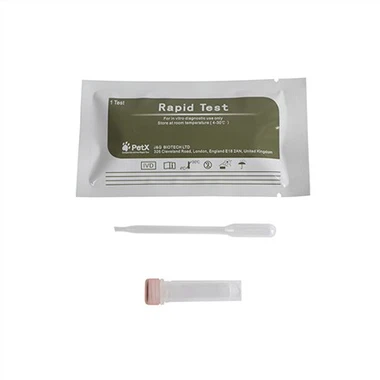
The Feline Giardia lamblia Antigen Test is designed to detect Giardia-specific antigens in feline fecal samples. Compared with traditional methods, antigen testing offers several practical advantages:
1. Higher diagnostic sensitivity
Antigen tests can detect Giardia proteins even when cysts are not visible under the microscope.
2. Rapid results
Most rapid antigen assays provide results within minutes, supporting faster clinical decision-making.
3. Simplified workflow
The test requires minimal equipment and training, making it suitable for routine use in veterinary clinics and diagnostic laboratories.
4. Early detection
Antigen testing can identify infections earlier in the disease course, improving treatment outcomes and reducing environmental contamination.
Role in Veterinary Practice
In modern veterinary practice, Giardia antigen testing has become an important tool for:
- Screening cats with acute or chronic diarrhea
- Monitoring infection in multi-cat households or shelters
- Supporting preventive parasite control programs
- Confirming infection before initiating targeted treatment
Early and accurate diagnosis helps veterinarians manage infections effectively and reduce the risk of transmission to other animals.
Conclusion
Feline giardiasis remains a common intestinal parasitic disease worldwide. Due to the limitations of traditional diagnostic methods, rapid antigen testing provides a reliable and efficient approach for detecting Giardia lamblia infections in cats. Incorporating antigen-based diagnostics into routine veterinary practice can significantly improve disease detection, treatment planning, and infection control.