


Bovine Tuberculosis: Understanding The Disease And Antibody Detection
Nov 05, 2026
What Is Bovine Tuberculosis?
Bovine tuberculosis (BTB) is a chronic infectious disease caused primarily by Mycobacterium bovis, a member of the Mycobacterium tuberculosis complex. It mainly affects cattle but can also infect other domestic and wild animals.
Bovine tuberculosis is an important concern in the livestock industry because of its impact on animal health, farm productivity, and public health. The disease occurs in cattle populations across different regions and is closely associated with herd management and animal health surveillance.
After entering the host, M. bovis can establish a persistent infection and trigger the formation of granulomatous lesions in various tissues, particularly the lungs and lymph nodes.
Transmission and Clinical Signs
Bovine tuberculosis is primarily transmitted through inhalation of infectious aerosols during close contact between animals. Transmission can also occur through the ingestion of contaminated feed, water, or milk.
The disease often develops gradually. Infected cattle may show changes in health and productivity over time, with clinical signs varying according to the affected organs and stage of infection.
Common clinical signs include:
- Persistent coughing
- Difficulty breathing
- Progressive weight loss
- Reduced appetite
- Decreased milk production
- General weakness
- Enlarged lymph nodes
These signs are important considerations in routine cattle health monitoring, particularly in herds where animal health and productivity are closely managed.
MPB70 and MPB83: Important Antigens in Bovine Tuberculosis
MPB70 and MPB83 are two well-known immunogenic proteins associated with Mycobacterium bovis. They are important antigenic targets in research on the immune response to bovine tuberculosis.
During infection, the cattle immune system recognizes bacterial antigens and produces specific antibodies. MPB70 and MPB83 are particularly relevant to this process because of their immunogenic properties.
Their use in serological assays provides a foundation for detecting antibodies associated with M. bovis infection.
Combining MPB70 and MPB83 antigenic components in one assay allows the detection system to target antibody responses against both proteins, making them valuable components in bovine tuberculosis antibody testing.
Bovine Tuberculosis Antibody Detection
Antibody detection plays an important role in understanding the immune response associated with bovine tuberculosis.
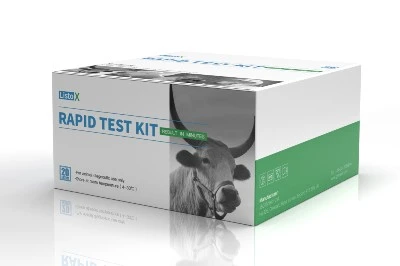
The Bovine Tuberculosis Antibody Test is a lateral flow immunochromatographic assay designed for the qualitative detection of Bovine Tuberculosis Antibody (BTB Ab) in cattle serum, plasma, or whole blood.
The assay incorporates MPB70 and MPB83 chimera recombinant antigens to recognize specific antibodies in the sample. Based on lateral flow immunochromatographic technology, the test provides a straightforward approach to serological antibody detection.
Its key features include:
Dual-antigen design: Incorporates MPB70 and MPB83 chimera recombinant antigens.
Qualitative detection: Identifies Bovine Tuberculosis Antibody (BTB Ab).
Multiple sample types: Suitable for cattle serum, plasma, and whole blood.
Lateral flow technology: Provides a convenient testing format.
Simple operation: Designed for practical use in veterinary and livestock health settings.
The Importance of Bovine Tuberculosis Monitoring
Bovine tuberculosis management is closely connected to long-term herd health and farm biosecurity.
For cattle farms, maintaining regular health records and monitoring the health status of animals are essential parts of daily management. Veterinary professionals can use relevant diagnostic information to support herd health assessments and disease surveillance.
In dairy and beef production systems, effective health monitoring also contributes to better livestock management, animal welfare, and sustainable farm operations.
As awareness of bovine tuberculosis continues to grow, reliable diagnostic tools remain an important part of veterinary support for the cattle industry.
Conclusion
Bovine tuberculosis remains an important infectious disease affecting cattle health and livestock production. Understanding Mycobacterium bovis and its immunogenic proteins, particularly MPB70 and MPB83, helps provide insight into the antibody response associated with infection.
With its MPB70 and MPB83 chimera recombinant antigen design and lateral flow immunochromatographic technology, the Bovine Tuberculosis Antibody Test offers a practical approach to qualitative BTB Ab detection in cattle serum, plasma, and whole blood.
References
1.World Organisation for Animal Health (WOAH). Infection with Mycobacterium tuberculosis Complex. Terrestrial Manual.
2. World Health Organization (WHO). Zoonotic Tuberculosis.
3. Waters, W. R., et al. (2011). Development and evaluation of an enzyme-linked immunosorbent assay for bovine tuberculosis. Clinical and Vaccine Immunology.
4. Schiller, I., et al. (2010). Bovine tuberculosis: a review of current and emerging diagnostic techniques in view of their relevance for disease control and eradication. Transboundary and Emerging Diseases, 57(4), 205–220.


